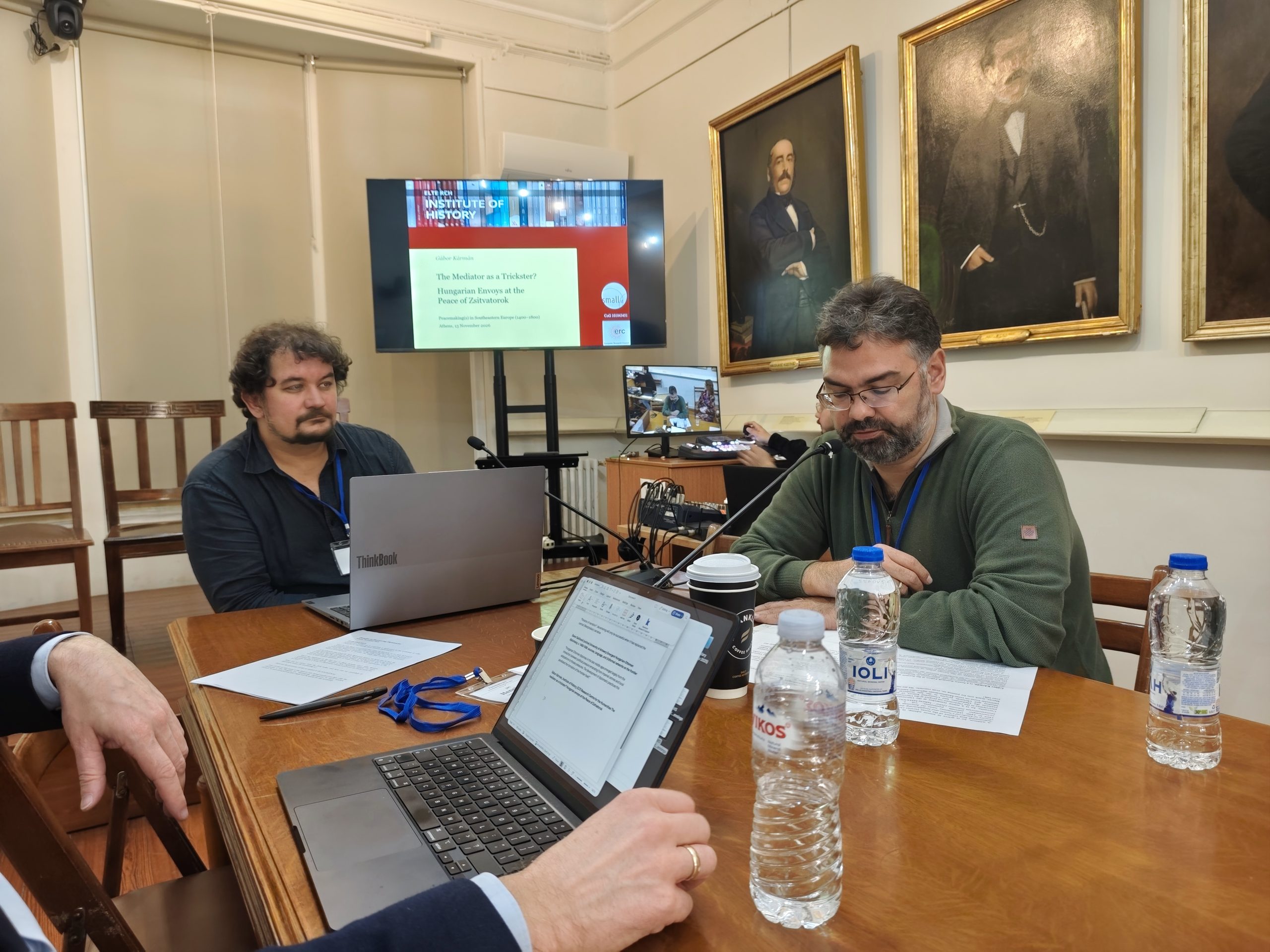
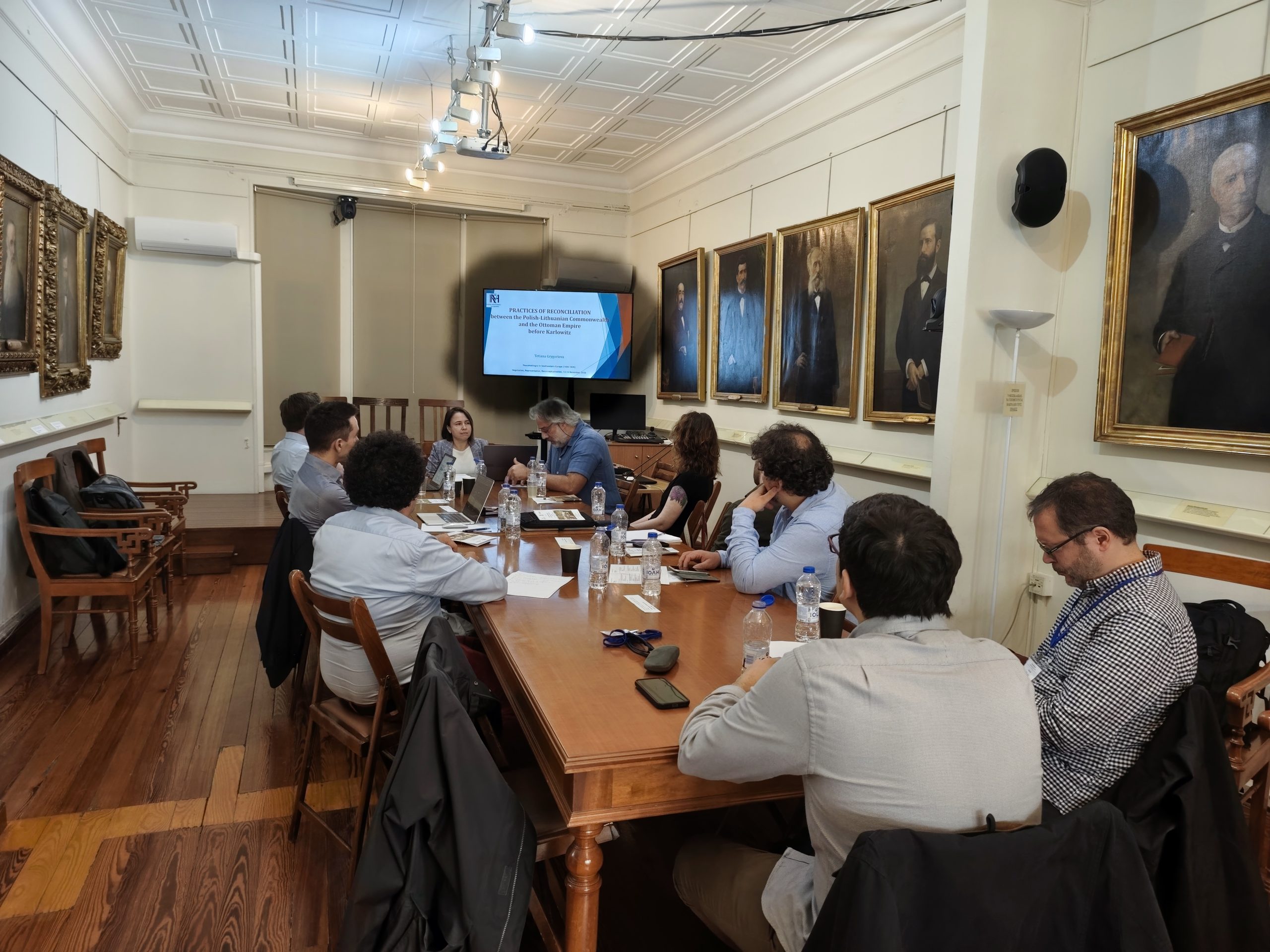
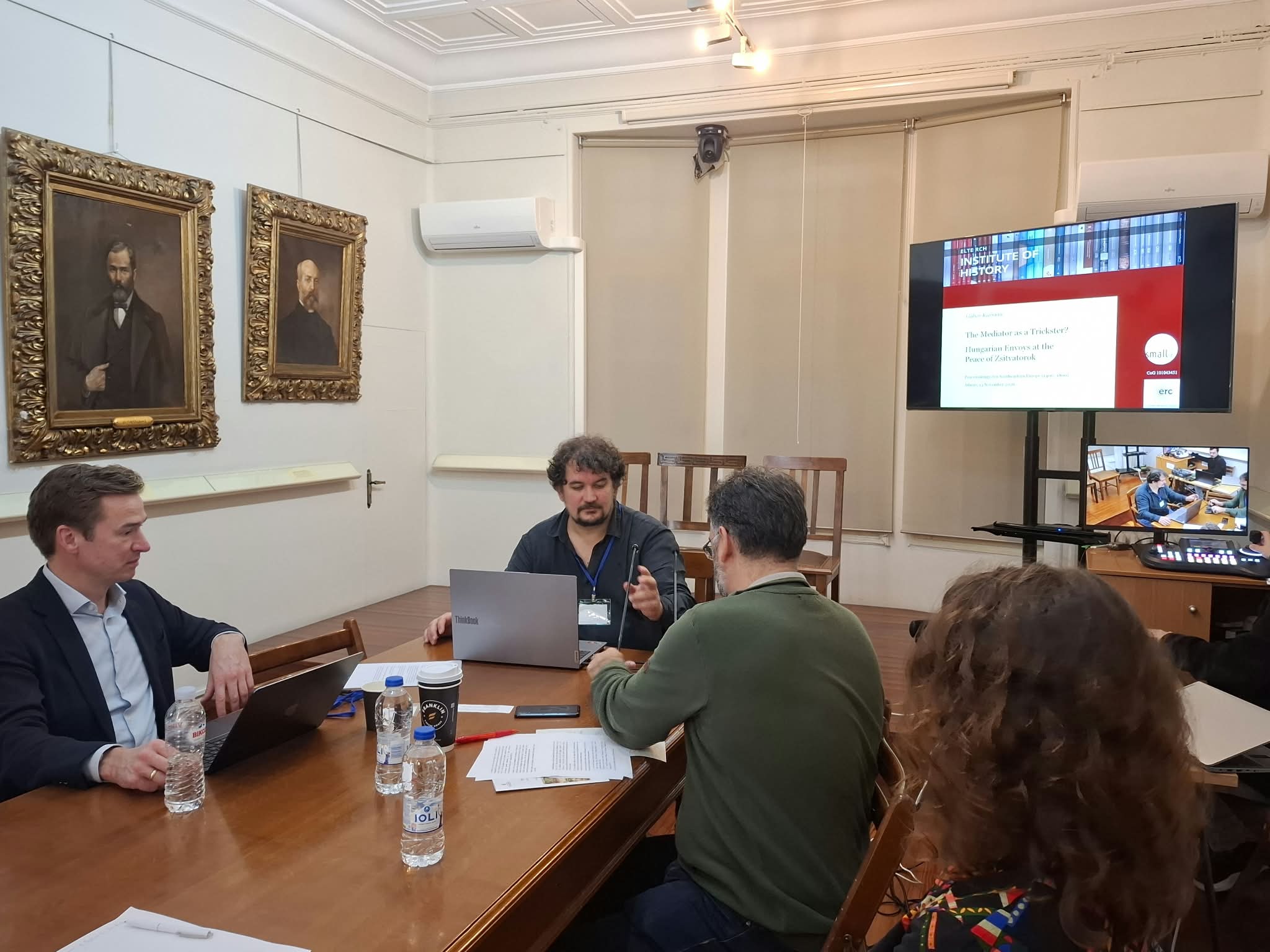
On 13–14 October 2026 a workshop was organised in the Historical Archive of the University of Athens under the title Peacemaking(s) in Southeastern Europe (1400–1800): Negotiation, Representation, Reconceptualisation. The convenor of the event, Konstantinos Poulios aimed in the framework of his research project (DEWEST) to bring together renowned experts of the diplomatic history of the region, especially those focusing on the Habsburg–Ottoman and Polish–Ottoman relationship, to discuss the most pressing questions of current research, and the potential benefits of the actual trend of de-centering the research and focus on territories that traditionally were not in the focus of this sub-discipline.
The SMALLST project were represented by two members. Gábor Kármán focused on the negotiations of the Peace of Zsitvatorok (1606) and especially on the role of the Hungarian delegation, representing István Bocskai and his followers. It is a well-known fact that a lot of trouble was created in relation to the peace treaty closing the Long Ottoman War by the fact that the Habsburg and Ottoman parties accepted different texts as a valid final version. It seems that neither the traditional interpretation, that blamed the interpreters for the fault, nor the alternative explanation, raised in the 1980s, which emphasised the active contribution of Bocskai’s delegation to the blunder, can be confirmed. While everyone was interested in the speedy conclusion of the peace, it was made possible by the blunder that no one compared the two texts signed separately by the two parties. A longer-term consequence of this blunder was that in the century to follow mechanisms for Habsburg–Ottoman peace-making and -maintaining involved an extraordinary amount of hitherto unseen, repeated rounds of proof-reading the texts of each official document.
Tetiana Grygorieva discussed the practical and ceremonial questions related to peace negotiations during the time of the military conflicts of the Polish-Lithuanian Commonwealth and the Ottoman Empire. The parleys that went on in the theatre of war, without any pause in the military activities, had to face a number of grave problems in the field of representation, but even of negotiations tactics, which were solved by creative methods, firstly improvised, which then later became systematic. One example was the employment of the rulers of Moldavia and Wallachia as primary contacts for the Polish envoys: the recurrent phenomenon that discussing the conditions with the grand vizier could only take place once the framework of the reconciliation had been clarified by the Polish delegation and the Ottoman tributary princes, instructed for this purpose by the Ottoman party.