The international conference „Diplomacy, Intelligence, and Influence in the Balkans and Beyond, 17th–19th Centuries” was organised at the Bulgarian Academy of Sciences in Sofia, on 23–26 March 2026. The members of the SMALLST group had their own panel in the program of the event.
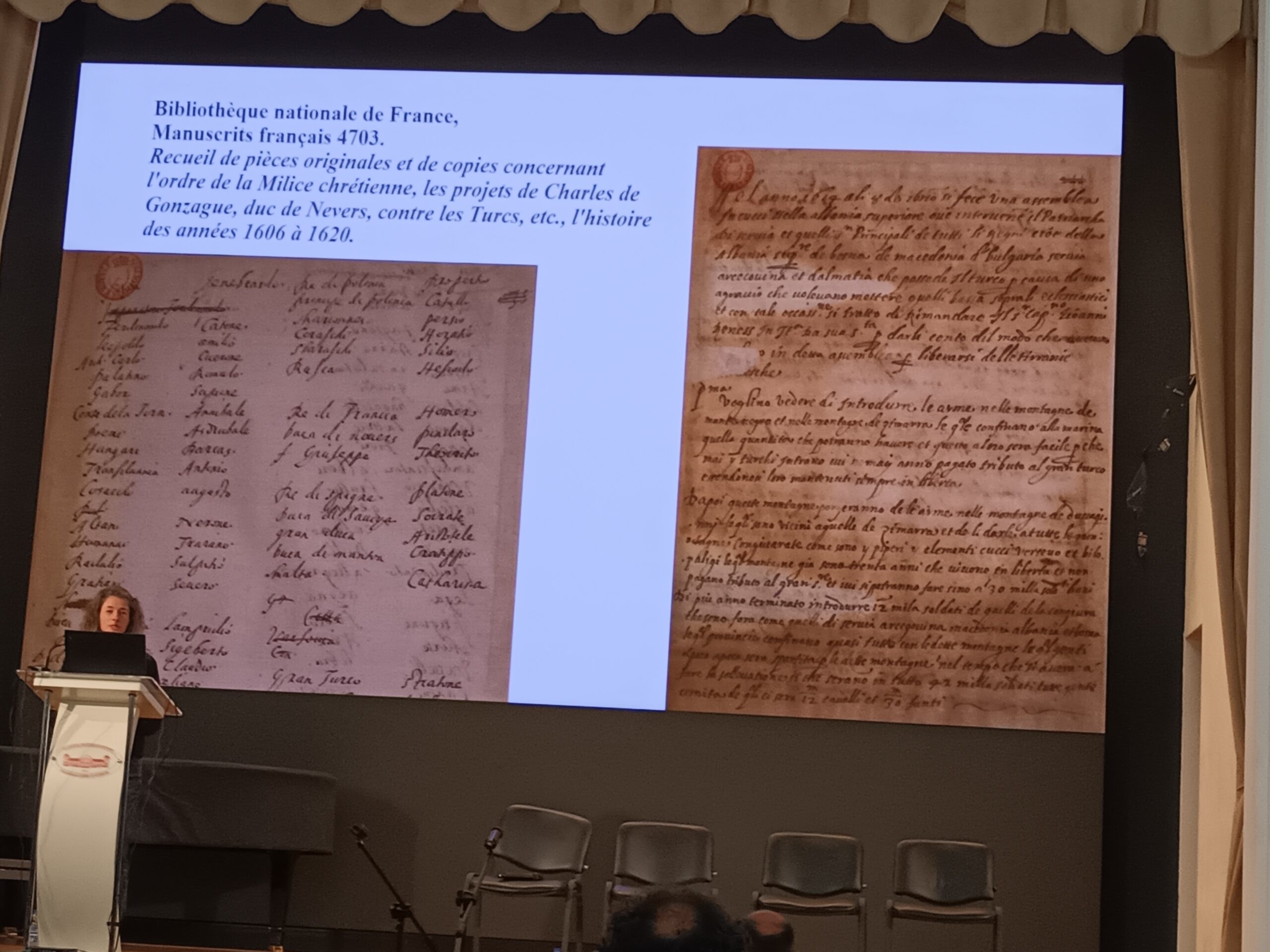
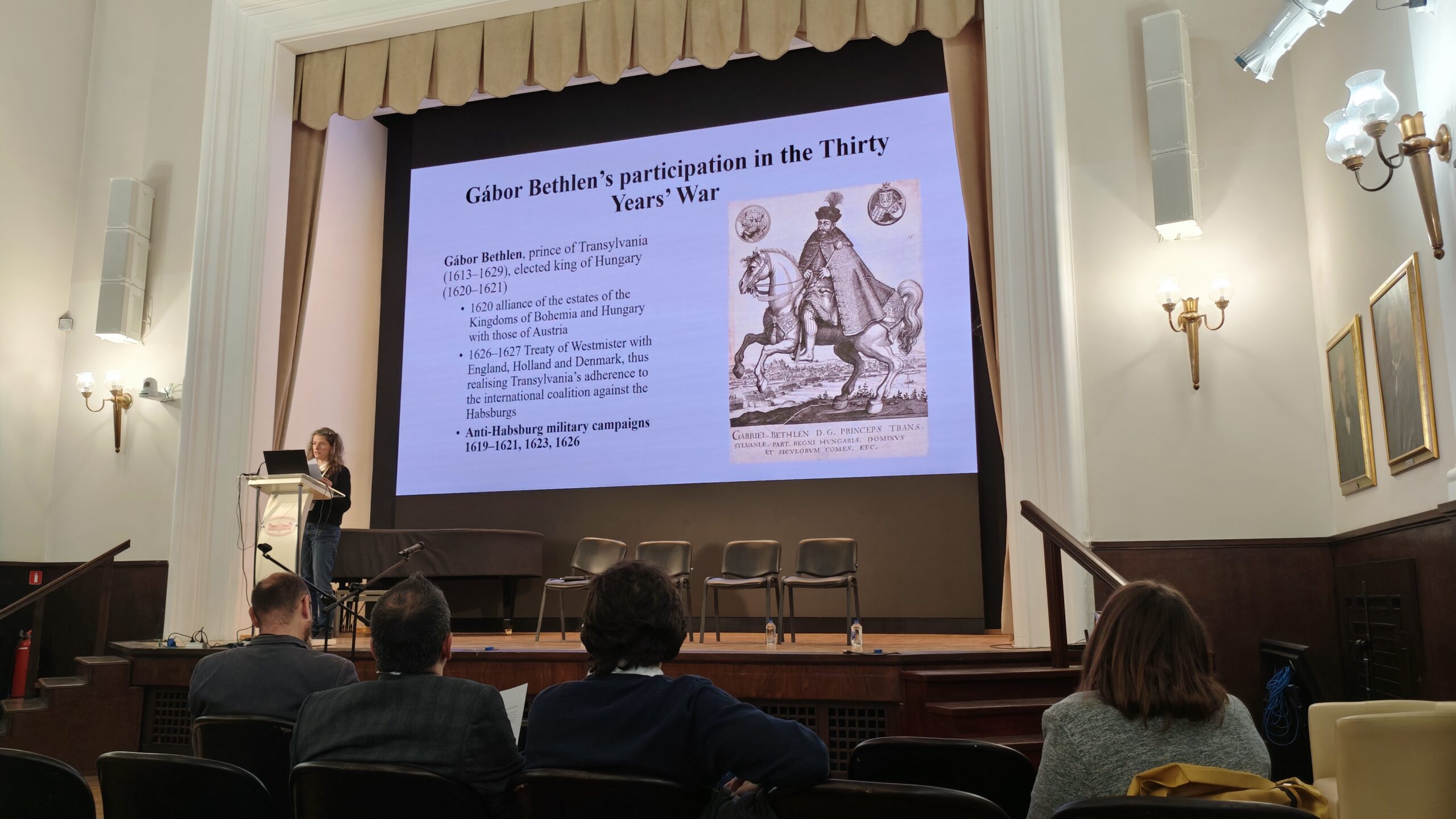
Zsuzsanna Hámori Nagy examined a little-understood aspect of Gábor Bethlen’s foreign policy from the perspective of the flow of information in the Balkans: between 1623 and 1625, the prince made several attempts to win the hand of a Habsburg archduchess, in exchange for which he held out the prospect of converting to Catholicism, and offered his assistance in driving out the Ottomans from Hungary. The presentation identified the activities of the Militia Christiana, a crusading order of knights, as the reason for this foreign policy move; Gábor Bethlen could in all likelihood have obtained information about its plans from both Western and Southeastern Europe. Plans for a possible landing in the Balkans by the order of knights founded by the Duke of Nevers were still on the table as late as the turn of 1623 and 1624; Gábor Bethlen’s diplomat and commercial agent, István Hatvani, returning from Venice, may have learned of this when he visited the home of Matteo Sturanni (a merchant from Ragusa serving as a secret correspondent for the Habsburgs in Belgrade), and gained access to his decoded correspondence, which he had left lying around.
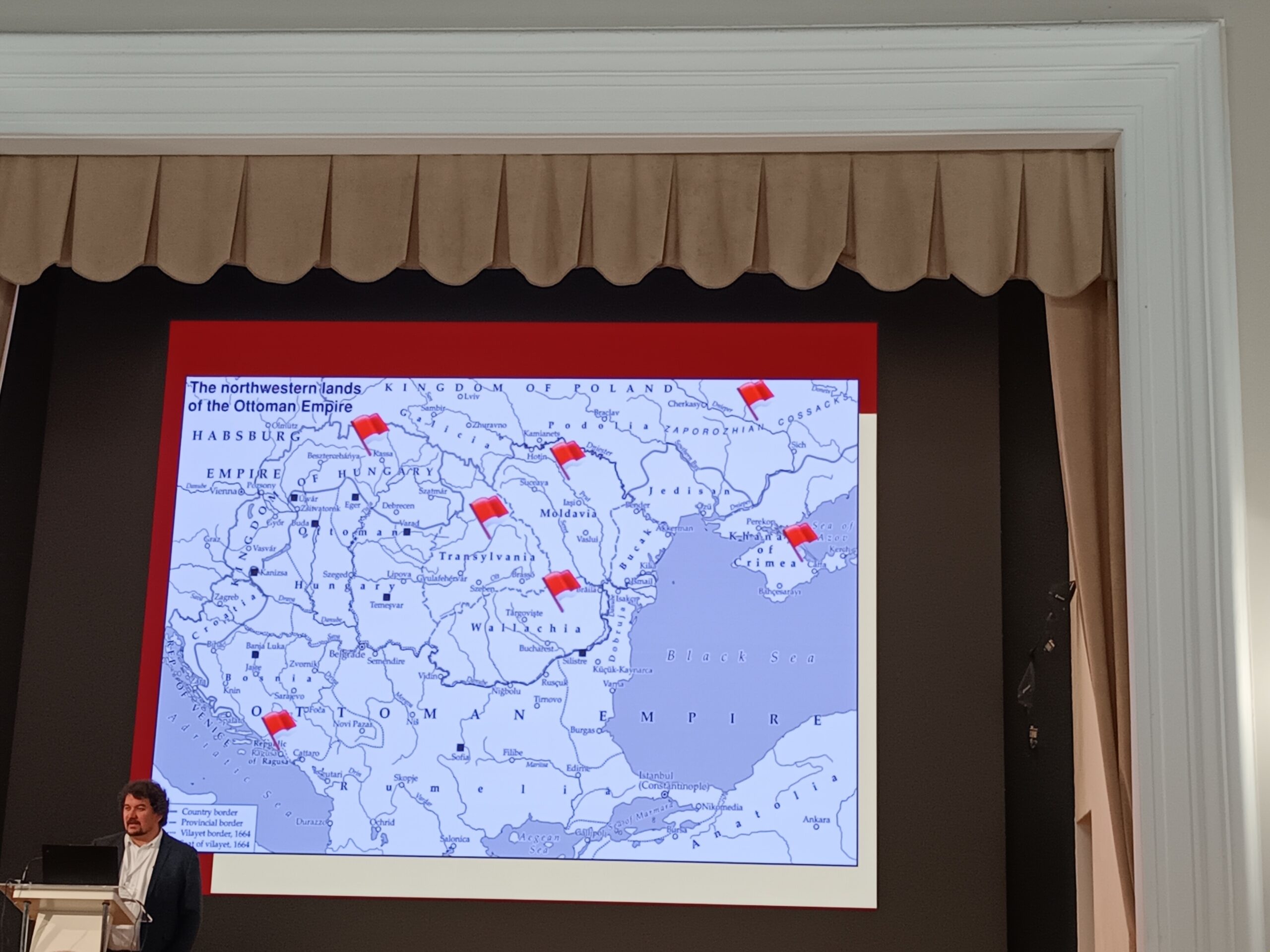
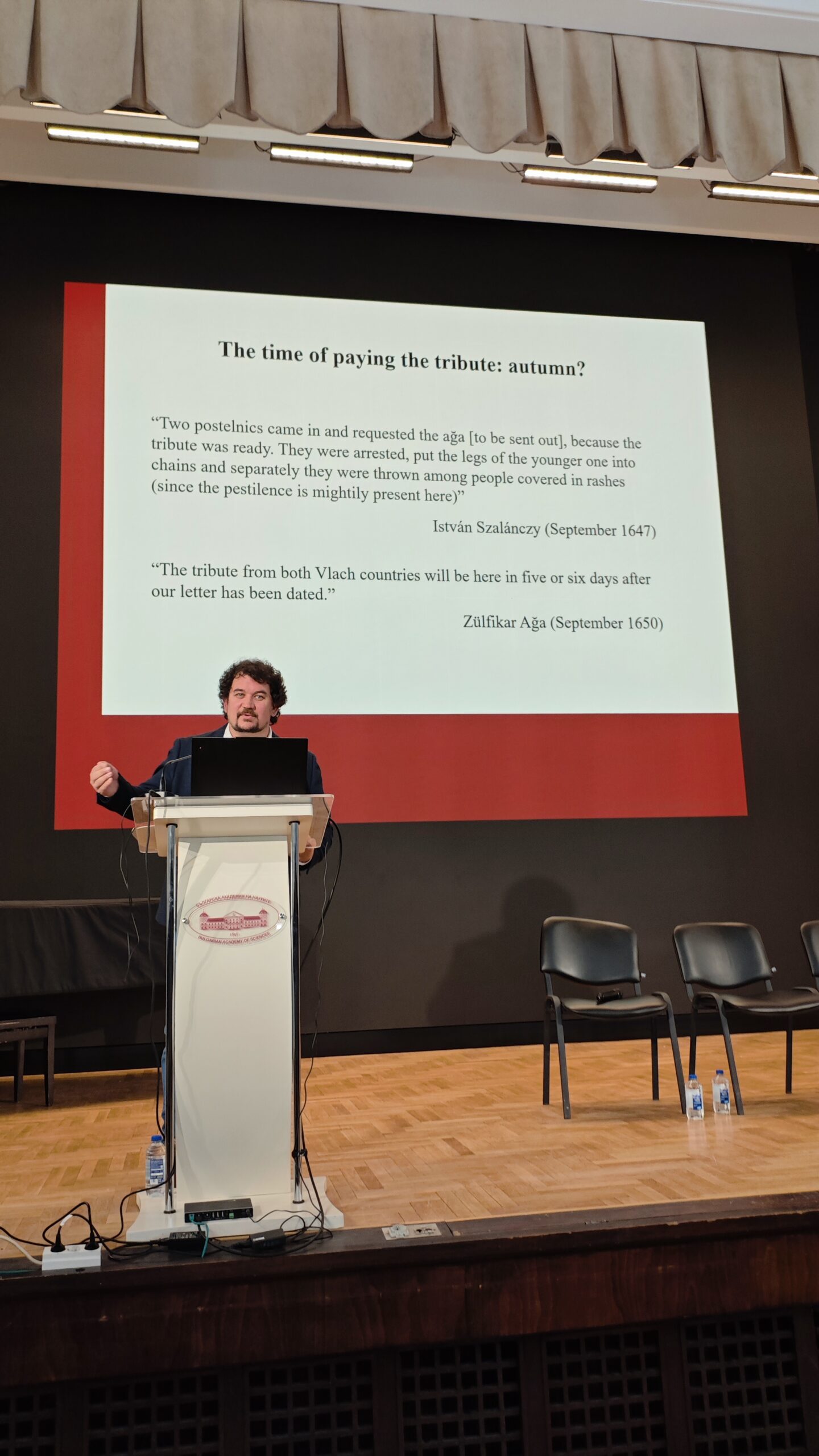
After a brief overview of the project’s work, Gábor Kármán presented the picture that emerges from Transylvanian sources dating from 1630 to 1660 regarding the representatives of Moldavia and Wallachia at the Sublime Porte. Since the documents are in Hungarian, this source material has been virtually ignored by research to date; but it provides much more abundant and detailed information than the Western diplomatic reports typically used in Romanian research. Contrary to the Transylvanian envoys, the representatives of the two trans-Carpathian countries apparently came from the country’s ruling class, and we can observe a continuity of the service’s key figures even after changes in the person of the ruler. Sources from Transylvania also helped determine the due date for tax payments in Moldavia and Wallachia: the basis for this system – which at first glance appears contradictory – is not the Gregorian calendar, but the Muslim calendar based on lunar months, since the tax had to be received by the Bayram Ramazanı.
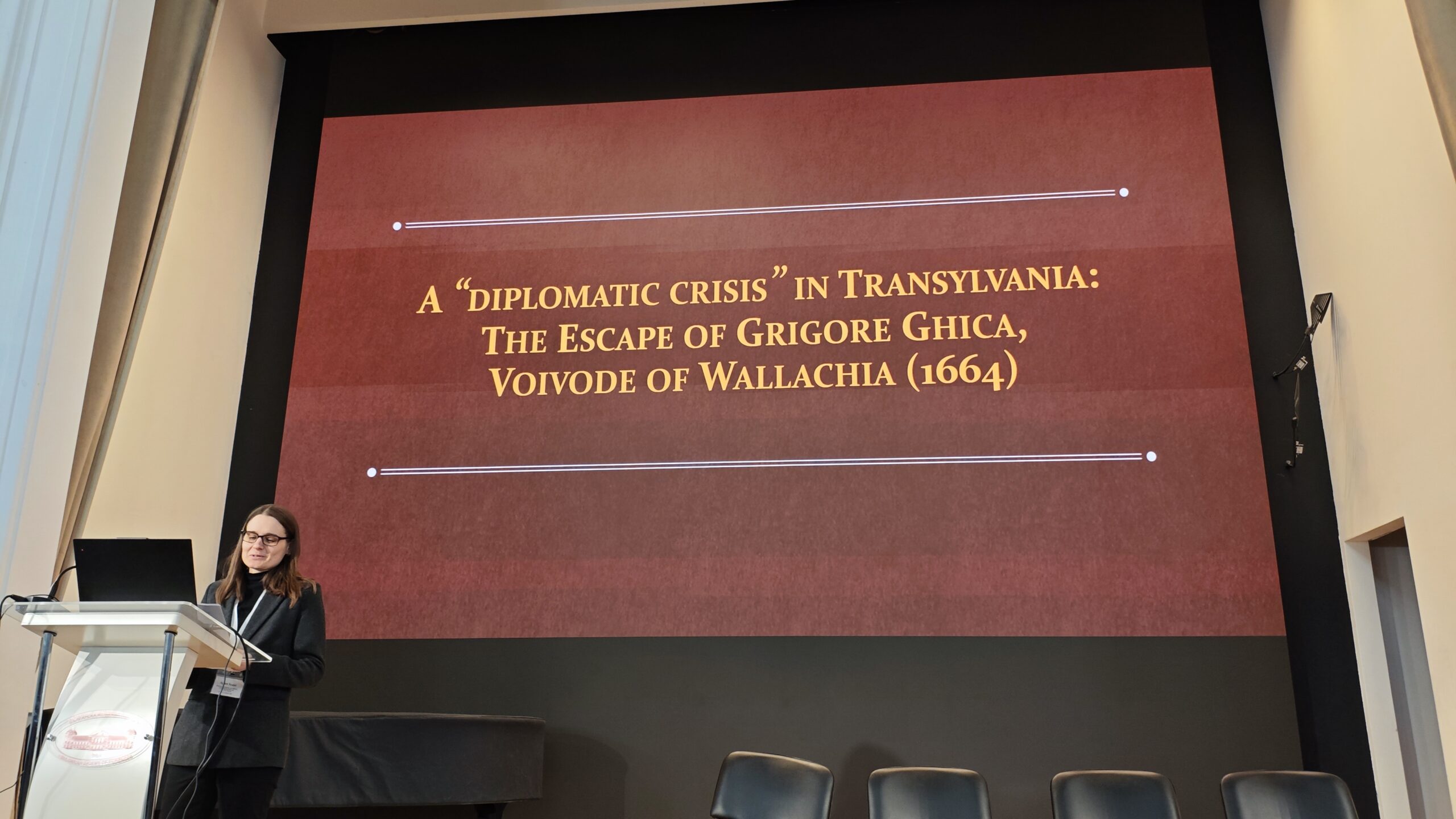
In her presentation, Ágnes Szalai examined diplomatic relations between Transylvania, Wallachia, and the Porte in the second half of the 17th century through a case study. The war launched by Grand Vizier Köprülü Ahmed against the Habsburg Empire in 1663 required the vassal states of the Porte, including the Wallachian armies led by Grigore Ghica, to join the conflict. However, he suffered a defeat in the battle near Léva (May 1664), and the Grand Vizier blamed him for the defeat against the Habsburgs; consequently, Grigore Ghica decided to flee with his wife, Maria Strudza, to escape the expected reprisals. The Transylvanian government sought to act in the spirit of Christian cooperation, while at the same time complying with the Porte’s expectations that they should not assist the Wallachian voivode – who had been branded a rebel – and his wife in their escape. The lecture examined this series of events, which caused a “diplomatic crisis” in the Principality of Transylvania, drawing primarily on the correspondence between the Apafi government and Transylvanian diplomats, as well as contemporary narrative sources.