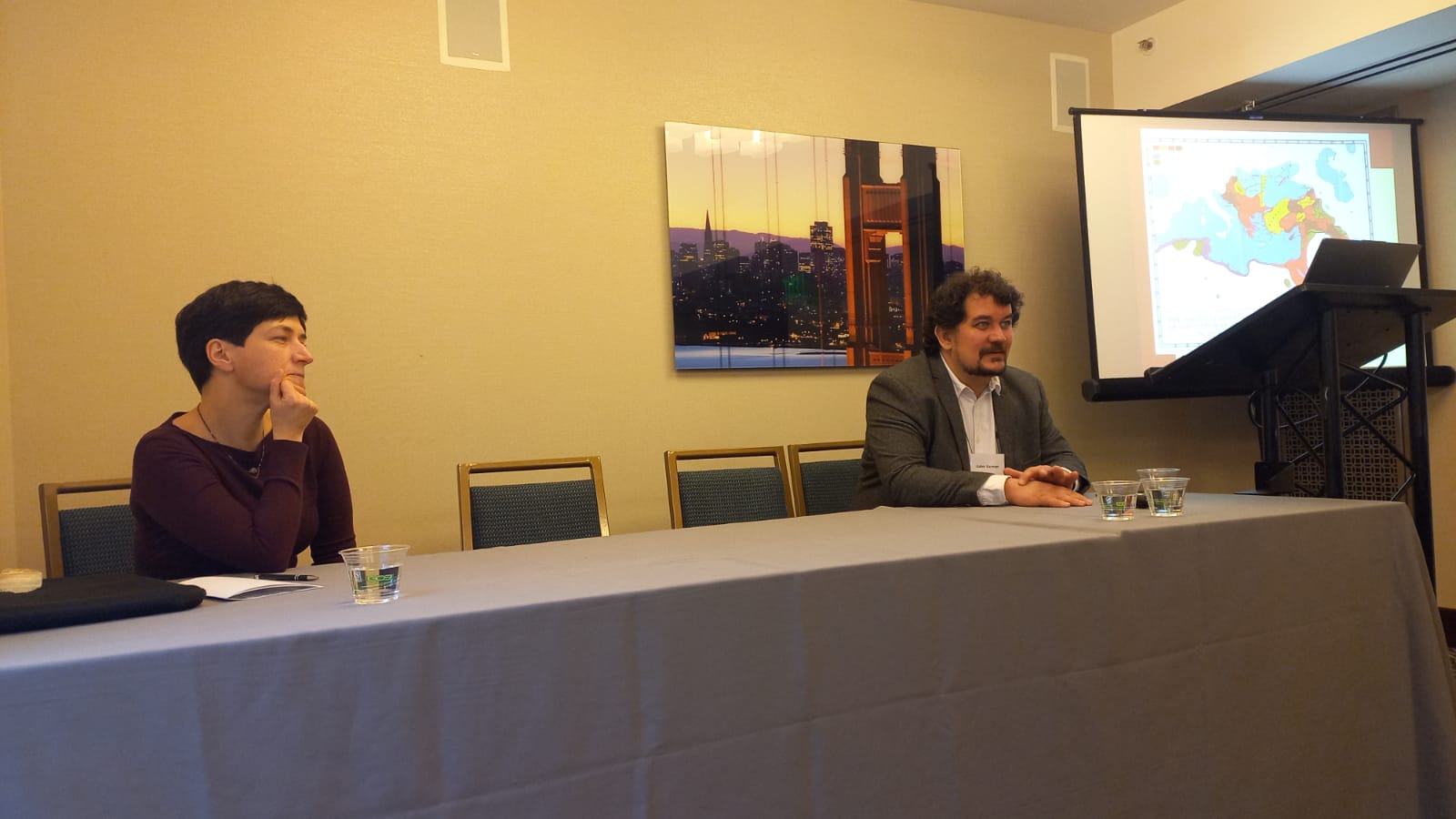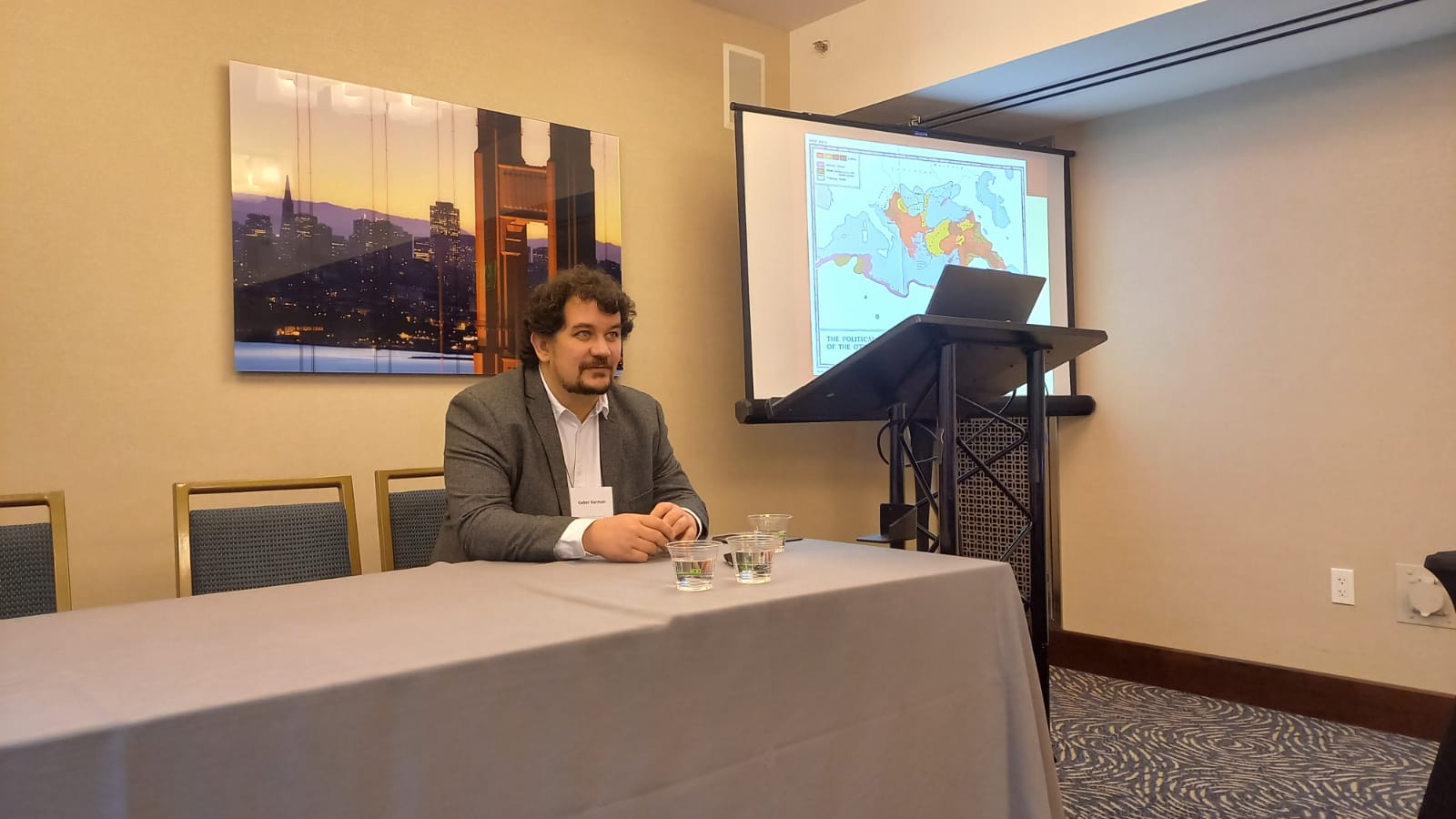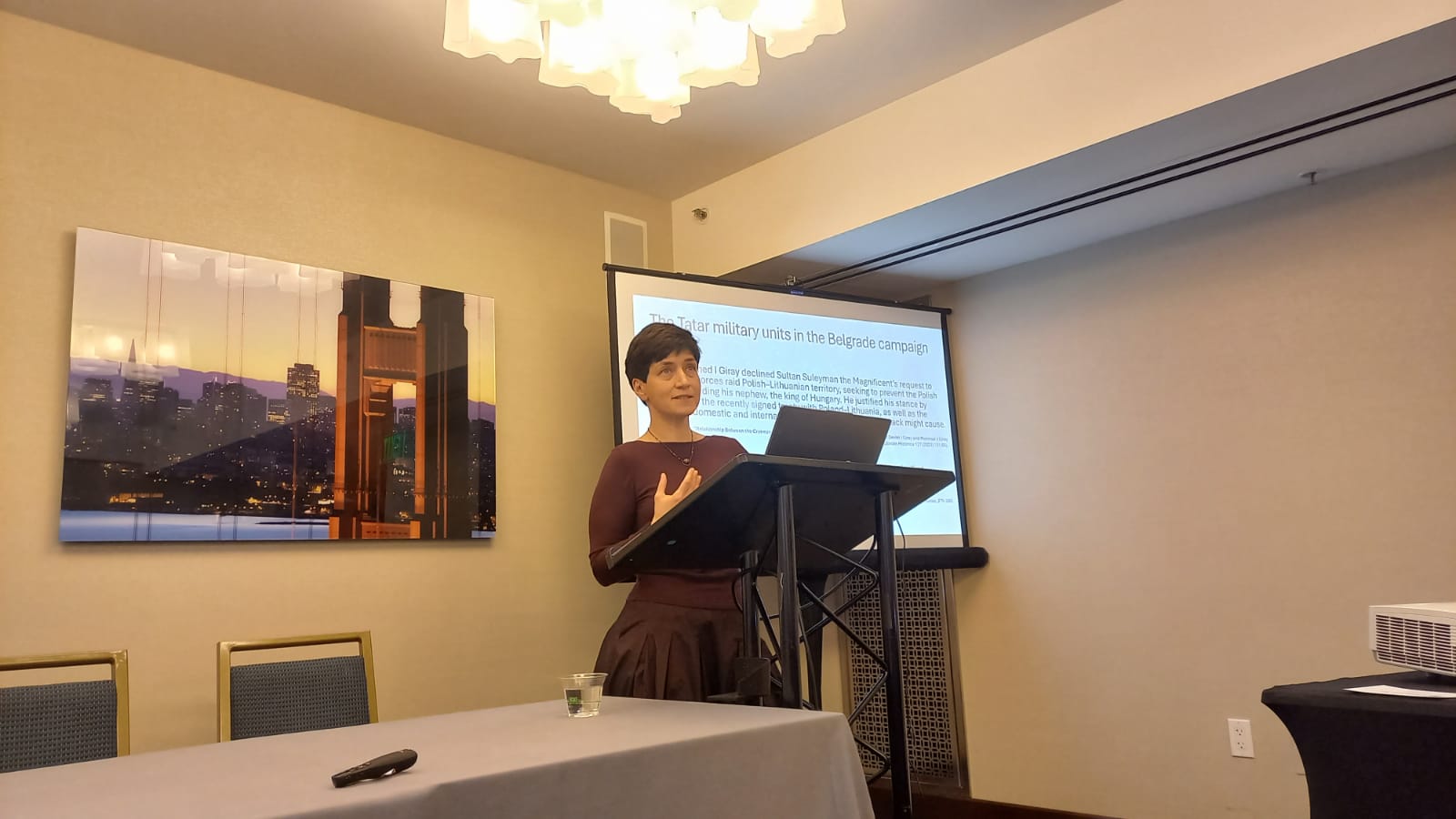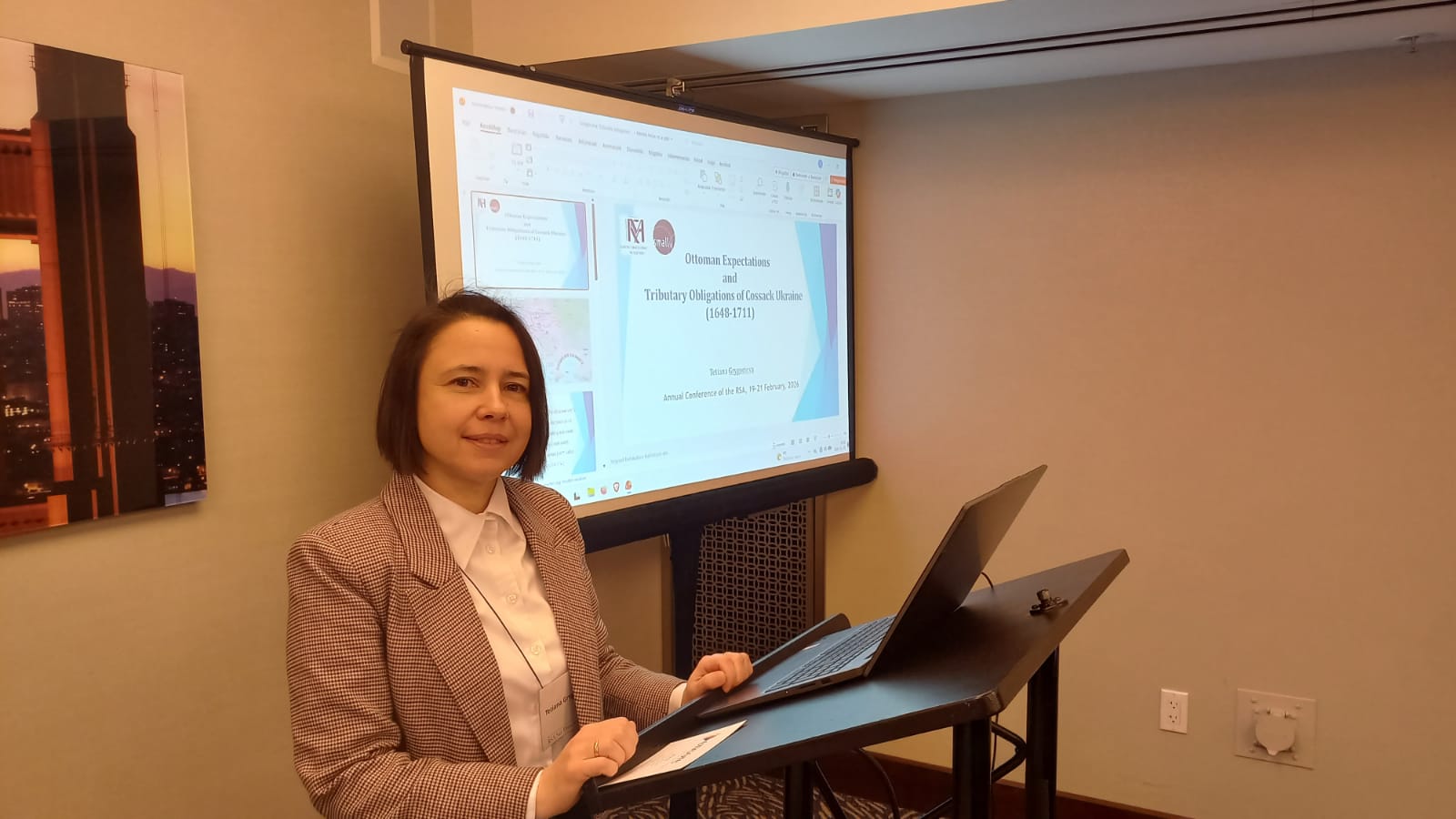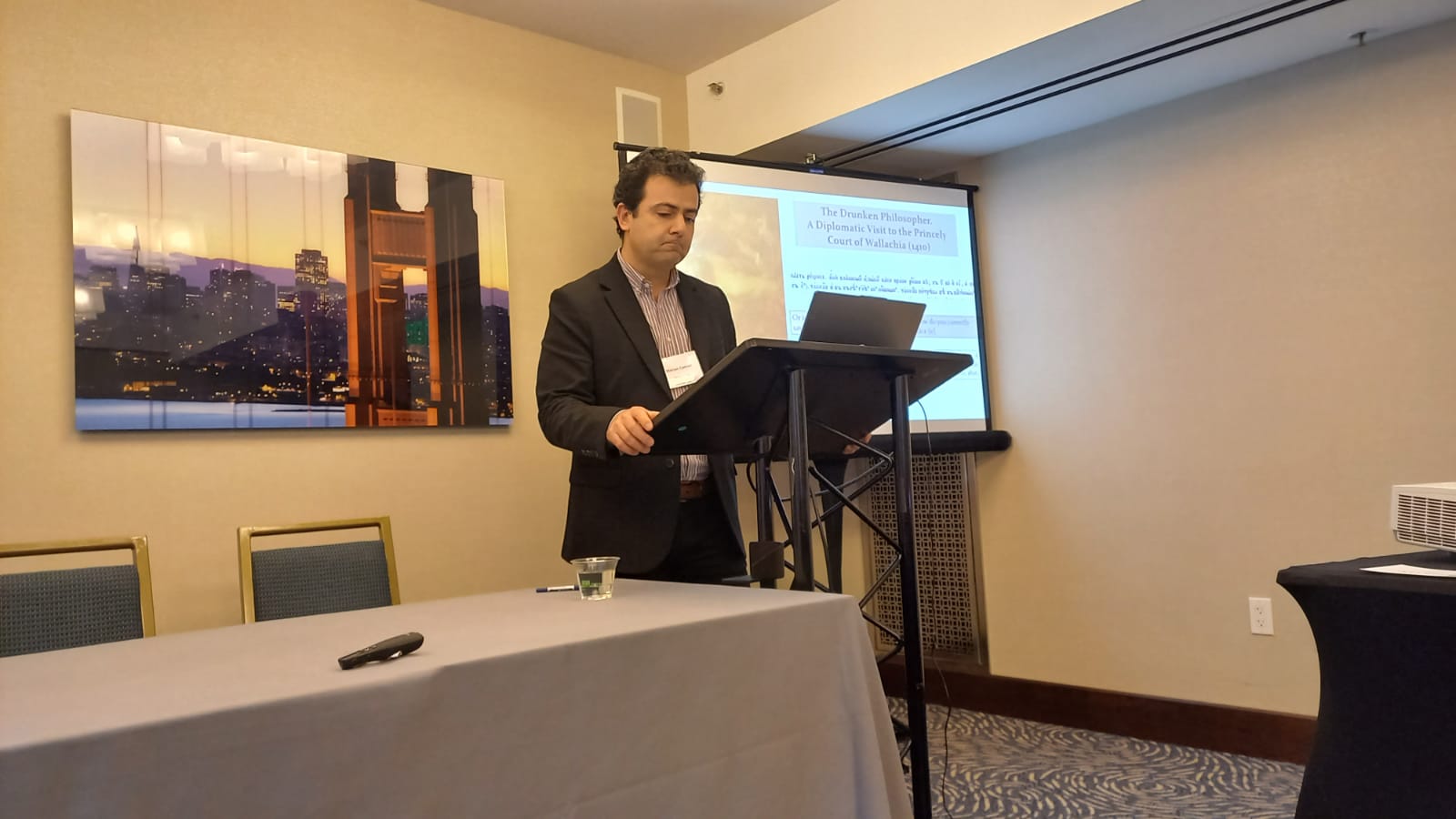
Our project presented its work at the 27th annual meeting of the Renaissance Society of America in San Francisco on 20 February 2026. Apart from a general presentation of the project’s monograph, SMALLST members shared case studies from the various small states in our focus in two panels.
In the opening paper, Gábor Kármán presented the project’s methodology, with particular emphasis on the methodological issues involved in the joint monograph aimed at comparing small states in the Ottoman borderlands. The results of the research were presented on the example of the two most recently completed chapters, which introduced the audience to the world of ceremonies. Since all of the small states functioned as vassals of the Ottoman Empire for at least part of their existence, a key question was to determine their hierarchy in the ceremonial order of the sultan’s court. All aspects of the analysis pointed to the prominent position of the Crimean khans, the similar status of Ragusa and Transylvania, and the lower prestige of Moldavia and Wallachia. The second chapter, which looked beyond the Ottoman milieu, pointed to common phenomena, conflicts arising from differences between various ceremonial systems (especially in the case of the Tatars), and the phenomenon of the fusion of local traditions and imperial traditions, which could be observed in some places.
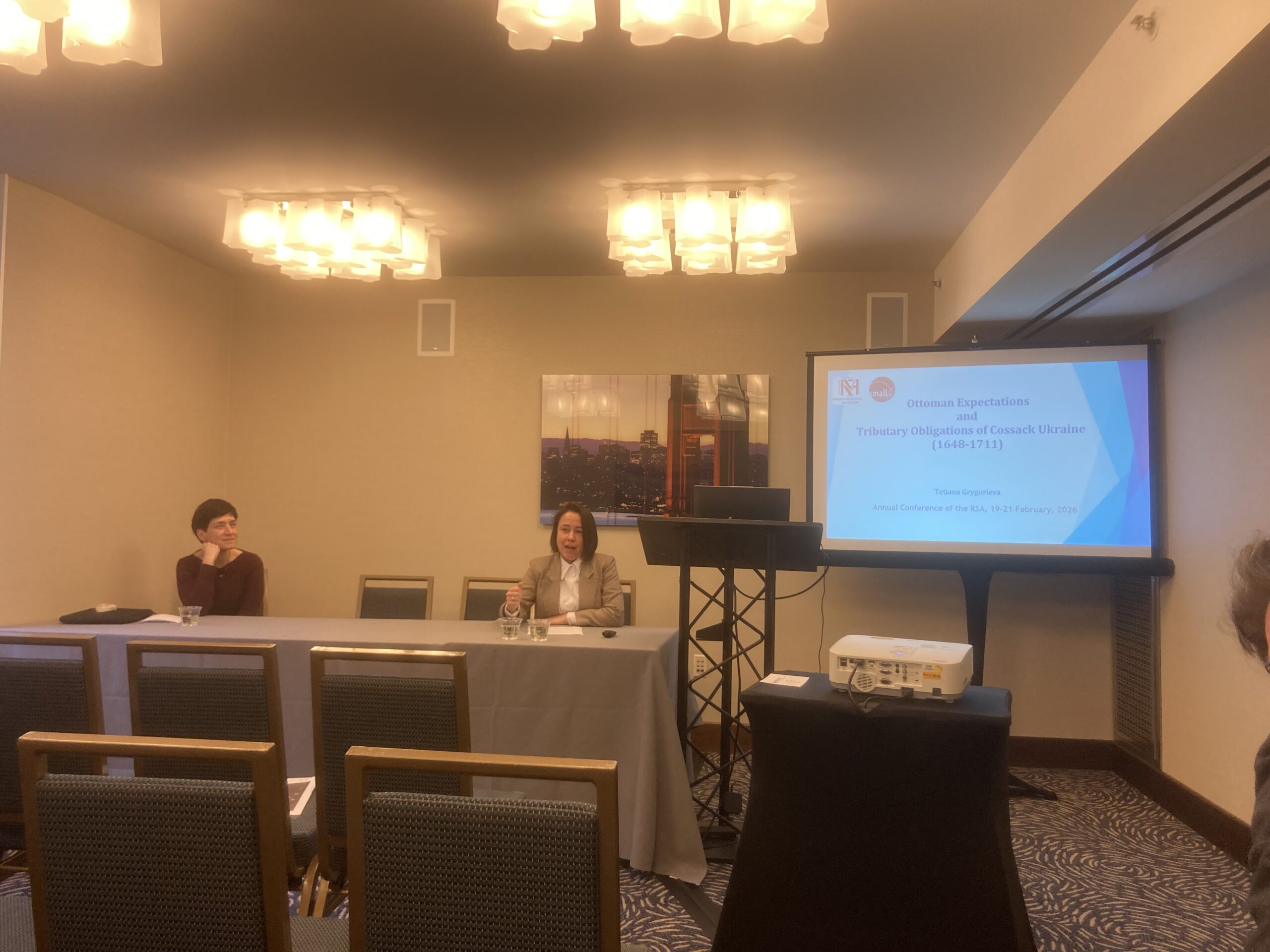
In her paper, Tetiana Grygorieva examined the strategic shift in the relations between Cossack Ukraine and the Ottoman Empire from 1648 to 1711, focusing on how several Cossack hetmans (Bohdan Khmelnytsky, Petro Doroshenko, and Pylyp Orlyk), who applied for Ottoman protection, were formally accepted into the “Well-Protected Domains”. She explored the conditions of this protection, both formally stipulated in diplomatic instruments and informally expressed in correspondence. The paper demonstrated that during the late seventeenth and early eighteenth centuries, the Ottoman Empire prioritized security and strategic defence over financial tribute when granting protection to Cossack hetmans. It sought to integrate the Cossacks into a regional defence network where they were supposed to serve under the primary influence of the Crimean Khan.
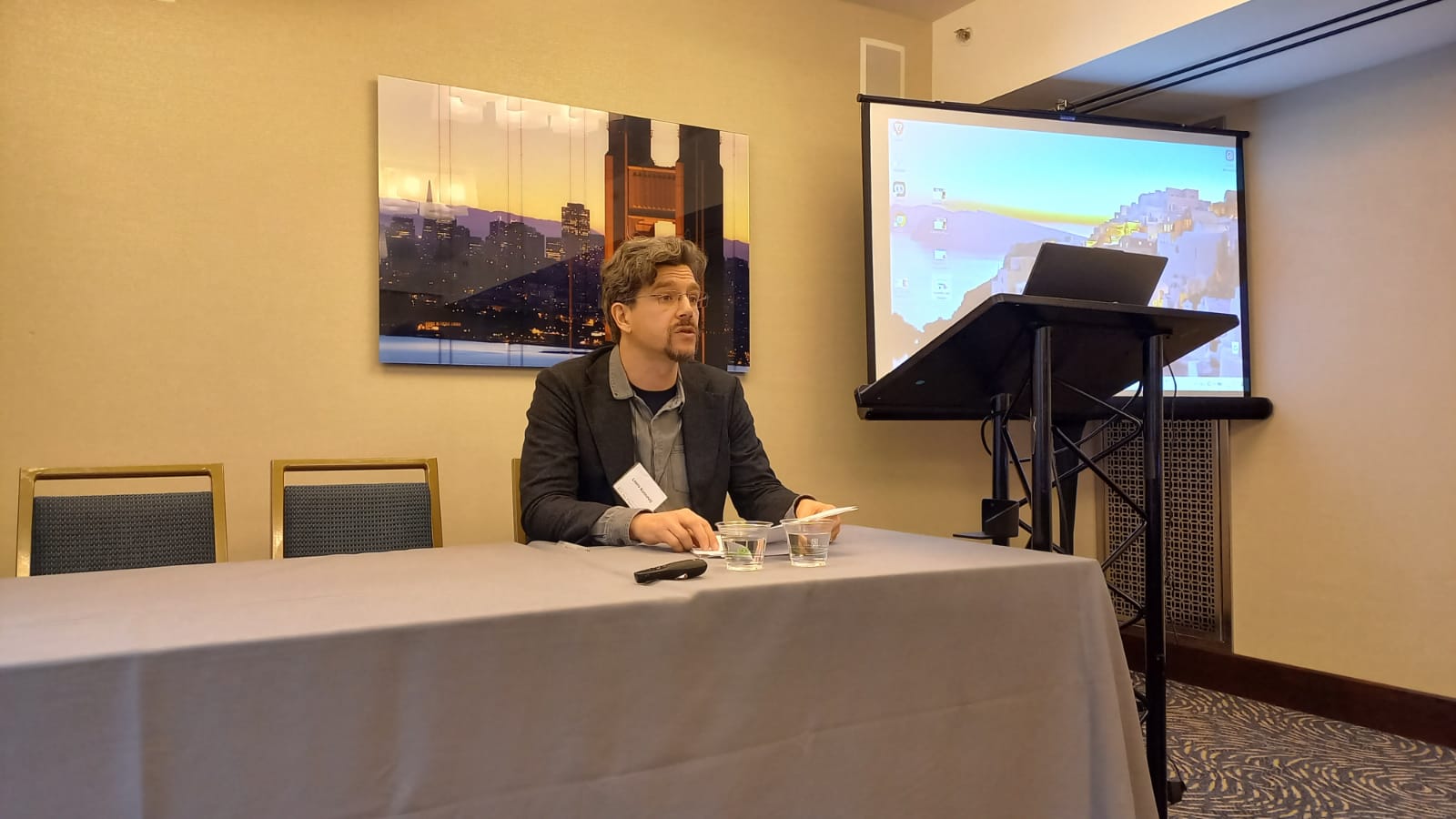
Lovro Kunčević’s paper on Ragusan espionage represented the small republic leveraging its precarious position between Ottoman, Venetian, and Spanish power through carefully managed intelligence‑sharing. The government oversaw a finely tuned system for gathering information through its trade networks, regulating both official and “private” informers while concealing or justifying its spying when discovered. Kunčević showed how this intelligence was circulated across European courts and deployed as a crucial diplomatic instrument to safeguard Ragusa’s independence amid competing empires.
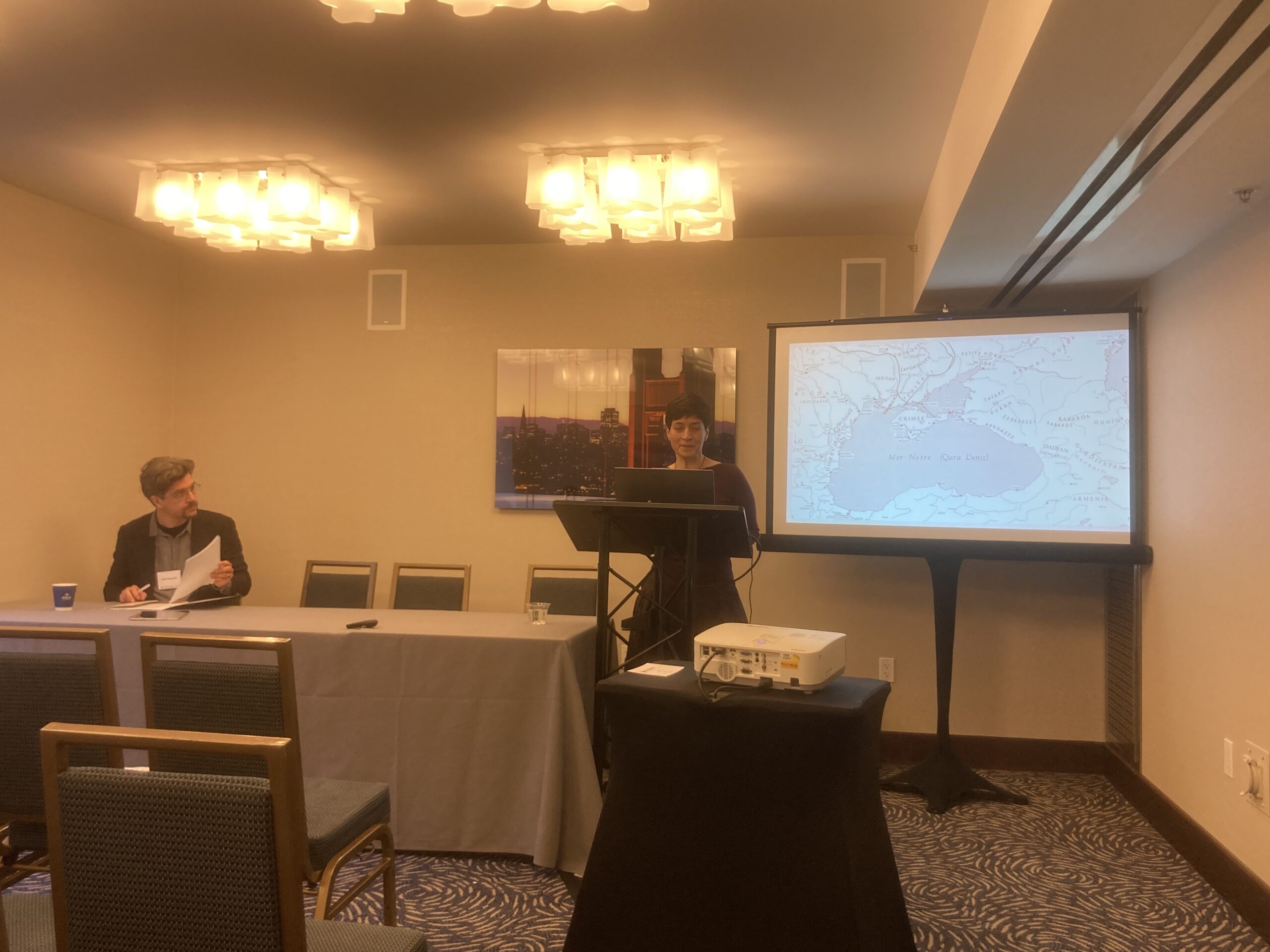
Natalia Królikowska-Jedlińska examined the ceremonial framework that accompanied joint Ottoman–Crimean campaigns. These battlefield rituals both expressed and reinforced the political hierarchy between the Ottoman Empire and the Crimean Khanate. They emphasized a shared Islamic identity and symbolized unity between the two allies. At the same time, these displays of solidarity masked ongoing tensions concerning status and precedence. From the late sixteenth century onward, sources point to disputes over the relative standing of the grand vizier and the khan. Although ceremonies during the Persian War (1578–1590) continued to underscore the khan’s high rank, second only to the sultan, Ottoman authors of this period felt compelled to justify this arrangement. As the grand vizier’s authority expanded, particularly in military leadership, later ceremonies increasingly highlighted his primacy, while still treating the khan with marked reverence.
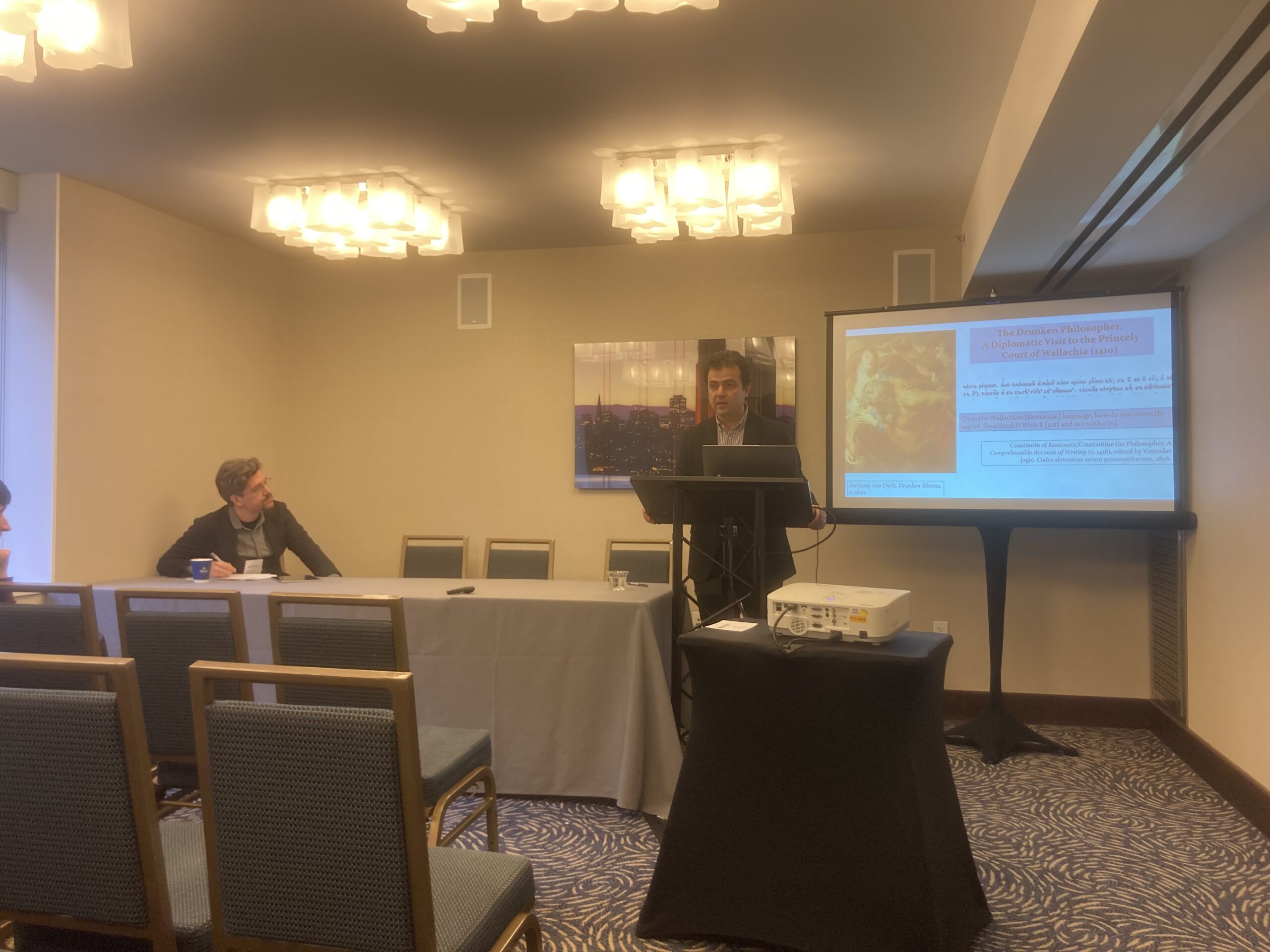
Marian Coman, in his turn, examined toasting and drinking as a diplomatic ritual at the Wallachian princely court, drawing on a wide range of sources – chronicles, travelogues, parenetic literature, and diplomatic correspondence – spanning the fifteenth to seventeenth centuries. Visitors consistently noted two features of Wallachian banquets: compulsory, excessive drinking and a strict hierarchical order of toasts. The ritual carried deep religious undertones, with toasts invoking God and the saints before turning to political figures. Coman proposed three analytical frameworks: cultural anthropology, which reads drinking as male competitive socialisation; narratology and imagology, which treat toasting as storytelling and a tool for constructing ‘otherness’; and semiotics, which analyses toasting as political communication. The order, number, and gestures accompanying each toast conveyed precise diplomatic messages. Ultimately, the toasting ceremony functioned as a meta-discourse on Wallachia’s paradoxical status – simultaneously an Ottoman tributary and a Christian sovereignty – allowing its princes to navigate and subtly assert political agency within tight constraints.
See the panel programmes here and here.